
Highlights
. 6.31-inch 1.5K AMOLED display with 120Hz refresh rate and 5,000 nits brightness.
. Snapdragon 8 Gen 5 processor delivers flagship-level gaming and performance.
. 50MP triple rear camera setup with ZEISS tuning and 3x telephoto lens.
. Massive 6,500mAh battery with 90W wired and 40W wireless charging.
. Premium compact design with IP69 rating and aluminum frame.
Premium Compact Design That Stands Out
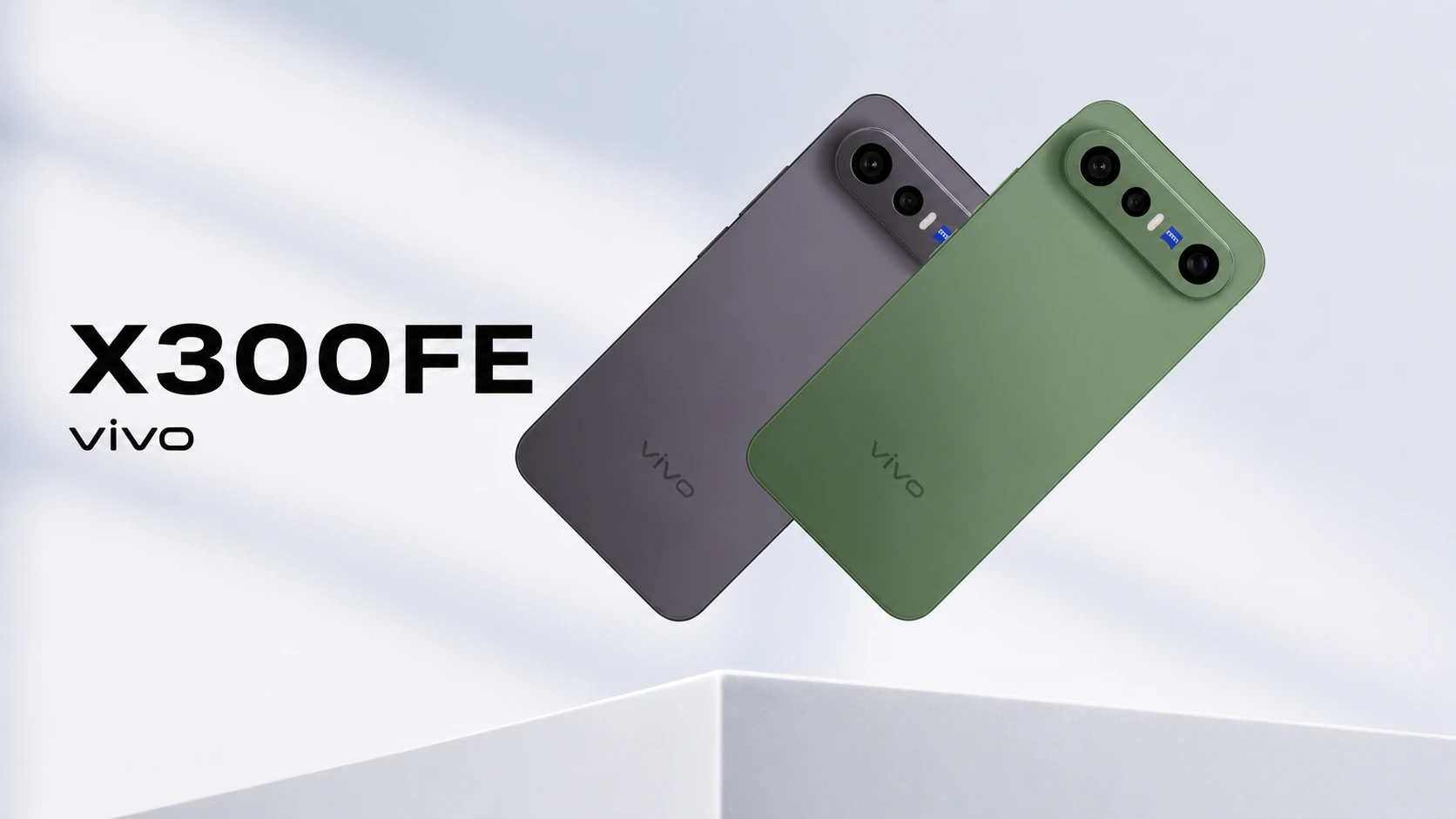
The design of the Vivo X300 FE instantly gives off a flagship-level feel. This time, Vivo has put a lot of effort into the design despite the phone being compact. The camera module looks sleek and premium, placed in a clean island-style layout on the top side. Its size feels almost perfect for one-handed usage, and the aluminum frame further enhances the premium feel.
The phone is just 7.9mm thick, which makes it feel slim and comfortable in hand. The Urban Olive color variant looks especially unique, although Vivo has also introduced Noir Black and Lilac Purple color options. Instead of a glass back, the phone comes with a fiberglass back panel along with a metal sand anti-glare coating, which helps reduce reflections when light falls on it. In daily use, the phone feels both lightweight and premium.
Talking about durability, Vivo has provided an IP69 rating, and for display protection, it comes with Schott Sensation Core protection. Overall, in the compact flagship category, the Vivo X300 FE definitely feels like one of the most stylish and practical smartphones available.
A Compact Display Done Right
The Vivo X300 FE comes with a 6.31-inch display, and honestly, it feels like the perfect “Goldilocks” size for a compact phone — not too small and not too big. It features a 1.5K AMOLED panel with a 120Hz refresh rate, and the peak brightness goes up to 5,000 nits, making the display bright and easily visible even outdoors.
The bezels are ultra-slim, which is quite rare to see on such a compact device. Vivo has also included SGS Blue Light certification, so eye comfort feels better during long screen usage sessions. HDR support is available on both Netflix and YouTube, and while watching HDR videos, the color gradation and contrast look very impressive.
When the Professional Color mode is enabled, the colors appear quite close to accurate, making the multimedia experience feel even more premium. Despite the compact size, the speakers are also well tuned, and overall, the display experience feels truly flagship-level.
Camera Hardware Remains Familiar, But Processing Improves
The main focus of the Vivo X300 FE is undoubtedly the camera system.
Interestingly, the hardware setup is very similar to the X200 FE. The phone includes:
- 50MP Sony IMX921 primary camera
- 50MP Sony IMX882 3x telephoto camera
- 8MP ultra-wide camera
- 50MP autofocus selfie camera
While the hardware may look familiar, Vivo has significantly improved image processing and software optimization this year.
The addition of support for the 200mm Gen2 teleconverter module is also notable. Combined with the compact form factor, this makes the phone surprisingly comfortable for street photography and zoom shooting.
Excellent Daylight Photography
The primary camera captures a very high level of detail. Using the ZEISS Natural preset results in colors that stay close to neutral rather than overly saturated.
HDR performance is another strong point. The phone does a great job balancing highlights and shadows while maintaining low noise levels in darker areas. Some detail loss in shadows can occasionally appear, but overall performance remains impressive.
When shooting subjects against harsh backlighting, the X300 FE manages exposure extremely well. Faces remain properly lit while the background exposure is also maintained nicely.
Portrait photography continues to be one of Vivo’s strengths. Edge detection is highly accurate, the bokeh effect looks natural and DSLR-like, and skin tones appear realistic in ZEISS Natural mode.
The Vivo mode increases saturation slightly, but the ZEISS Natural profile delivers the most balanced and accurate results.
Vivo also includes its street photography mode with multiple color styles and additional flexibility through Pro mode integration.
Low-Light and Zoom Performance
In low light, the primary camera performs fairly well, although some noise can appear in certain situations.
Selfies from the 50MP autofocus front camera look sharp in daylight, though occasional overexposed highlights are visible. This is likely something Vivo can improve further with software updates.
The ultra-wide camera behaves similarly to most 8MP sensors. Daylight performance is decent, low-light shots are average, and video recording is limited to serviceable 1080p 30fps output.
Zoom photography is where the X300 FE becomes particularly interesting.
By default, users can shoot at 3x or 73mm focal length. Up to 6x or 146mm, image quality remains very strong. Even 10x shots remain usable in many scenarios.
Beyond that point, AI processing becomes more aggressive and images start looking overly processed. That is where the optional teleconverter module becomes useful.
Adding the 200mm teleconverter significantly increases zoom reach. Even at 400mm equivalent zoom using a 2x crop, the images still look surprisingly good.
Because the phone itself is compact and lightweight, using the teleconverter does not make the setup feel cumbersome. In fact, it reportedly feels more comfortable for street shooting than Vivo’s own X300 Ultra.
Strong Video Capabilities
The Vivo X300 FE supports 8K 30fps recording with the main camera, along with 4K 120fps recording.
Video stabilization is solid, dynamic range is impressive, and overall image quality remains consistent across different cameras.
Vivo also allows users to enable a higher bitrate recording option, increasing video bitrate from 8Mbps to 24Mbps for noticeably better quality.
The telephoto and selfie cameras also support 4K 60fps recording, which adds more flexibility for creators.
Overall, despite using similar hardware to the X200 FE, the X300 FE delivers noticeably improved camera performance thanks to better processing and tuning.
Snapdragon 8 Gen 5 Delivers Excellent Performance
Powering the Vivo X300 FE is Qualcomm’s Snapdragon 8 Gen 5 chipset with the Orion CPU architecture and peak clock speeds up to 3.8GHz.
The phone is paired with 12GB LPDDR5X RAM and 512GB UFS 4.1 storage.
Daily performance feels extremely smooth with no noticeable lag or stutter during usage. Benchmark performance is equally impressive.
The device reportedly scores over 3 million points on AnTuTu while also delivering excellent CPU stability and top-tier Geekbench single-core scores.
Vivo’s tuning deserves special mention because compact phones often struggle with heat management and sustained performance. Here, Vivo has managed to deliver both.
The Adreno GPU’s Slice Dark architecture focuses more on sustained performance rather than short peak bursts, which works well in a compact flagship.
Gaming Experience
Gaming performance is another highlight.
In titles like BGMI and Call of Duty Mobile, the phone supports stable 120fps gameplay with smooth frame pacing.
Even in demanding games like Genshin Impact, the X300 FE averages around 59.2fps, placing it close to larger Snapdragon 8 Gen 5 flagship devices.
More importantly, it manages this performance without becoming excessively hot, which is impressive considering the smaller chassis.
This balance between sustained performance, thermal efficiency, and compact size makes the X300 FE one of the best-tuned Vivo phones in recent years.
Battery, Charging, and Software
The phone includes a 6,500mAh battery with support for 90W wired charging and 40W wireless charging.
During initial testing, the device delivered around six hours of screen-on time, though longer testing is still required for a full battery evaluation.
On the software side, the X300 FE runs OriginOS 6 based on Android 16.
Vivo is promising:
- 5 years of Android updates
- 7 years of security updates
OriginOS 6 includes features like:
- Origin Island
- AI tools
- Office Kit
- One-tap transfer
- Shake and Share
Shake and Share is one of the newer additions introduced alongside the X300 Ultra and X300 FE. By shaking two supported devices simultaneously, users can quickly connect and transfer files.
The software experience itself feels fluid, though some unnecessary features like lock screen posters and V App Store notifications may need to be disabled manually.
Connectivity and Final Verdict
The Vivo X300 FE supports:
- Dual nano SIM
- eSIM
- 18 5G bands
- Wi-Fi 7
- Bluetooth 6
- NFC
5G connectivity performance is reportedly excellent, and cloud gaming through GeForce Now also works very smoothly on the device.
The only real hardware disappointment is the USB 2.0 port. At this price point in 2026, faster USB speeds would have been expected.
Still, the overall package remains extremely compelling.
The Vivo X300 FE combines premium looks, flagship-level performance, strong cameras, excellent battery life, wireless charging, and compact ergonomics into a single device. It feels like a true compact flagship rather than a toned-down FE variant.
For users looking for a powerful yet manageable smartphone in 2026, the Vivo X300 FE easily stands out as one of the best options available.