

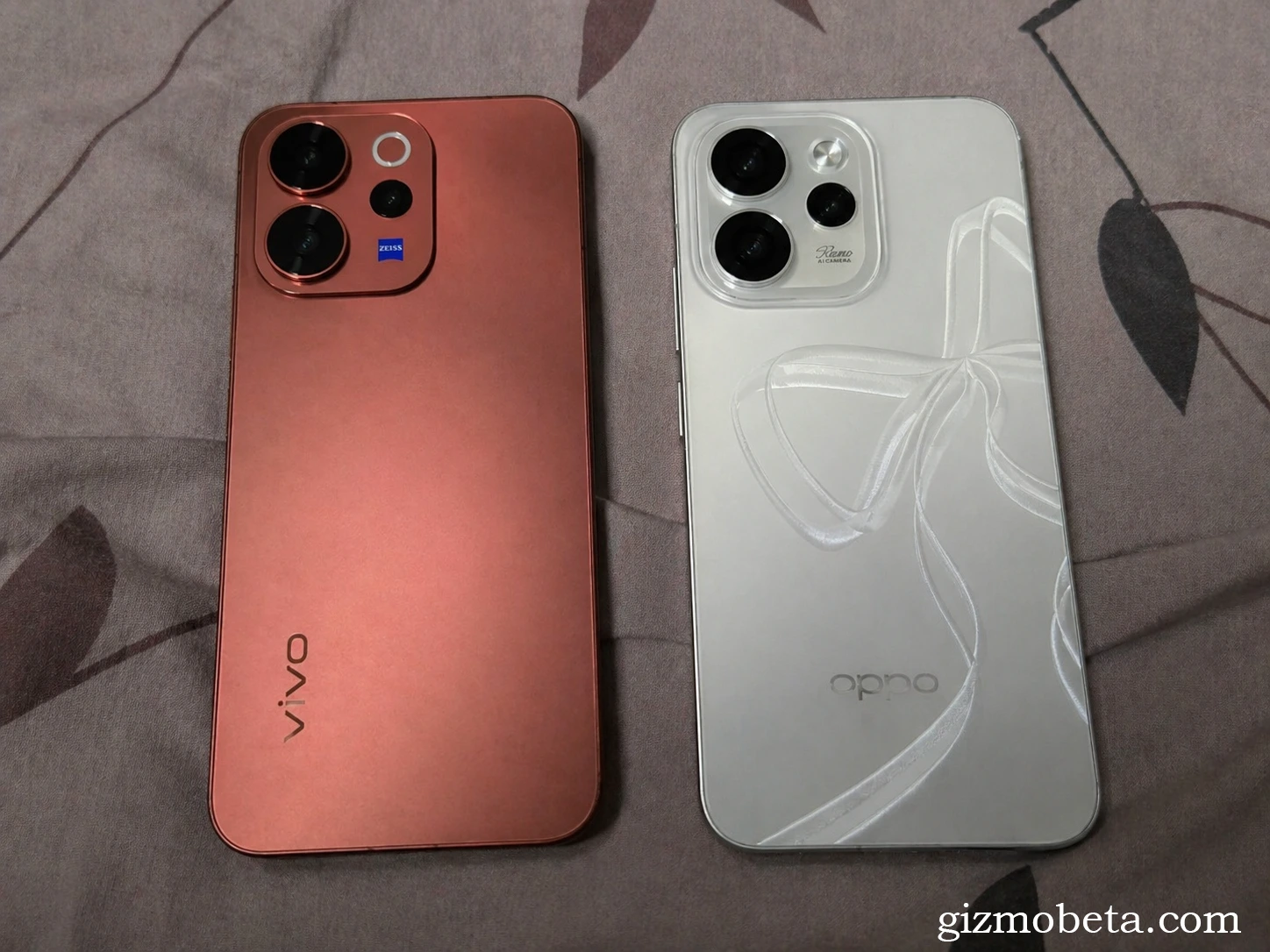
After using both the Vivo V70 and OPPO Reno 15 side by side for a few days, one thing became clear both phones may look similar on paper, but in real-life use, there is quite a noticeable difference.
First, let’s talk about pricing. The Vivo V70 is priced slightly higher than the Reno 15, with a difference of around ₹3,000–₹5,000 depending on the variant. In simple terms, Vivo is a bit more expensive, so naturally expectations from it are also higher.
When I tried both phones for daily use social media scrolling, camera usage, some gaming, and normal multitasking it felt like both have their own strengths. The Reno 15 feels lighter and more comfortable in hand, while the Vivo V70 feels more solid and stronger in some areas.
In this article, I won’t just compare specs. I’ll directly explain which phone performs better in real life, where each one stands out, and which one would actually be the better choice if you are planning to buy one of them.
Vivo V70 vs Oppo Reno 15 – Specifications
| Category | Vivo V70 | OPPO Reno 15 |
|---|---|---|
| Price (Approx.) | ₹49,999+ | ₹47,999+ |
| Design | Premium glass back + metal frame | Slim & lightweight premium body |
| Feel in Hand | Solid and premium | Light and comfortable |
| Display Size | 6.59-inch | 6.7-inch |
| Display Type | AMOLED | AMOLED |
| Resolution | 1.5K | FHD+ |
| Refresh Rate | 120Hz | 120Hz |
| Brightness | Up to 5000 nits | High brightness |
| Processor | Snapdragon® 7 Gen 4 | Snapdragon® 7 Gen 4 |
| GPU | Adreno™ 722 | Adreno™ 722 |
| Gaming | Better performance, stable gaming | Better performance, stable gaming |
| RAM | LPDDR5X | LPDDR5X |
| Storage | UFS 4.1 | UFS 3.1 |
| Main Camera | 50MP ZEISS OIS | 50MP OIS |
| Ultra-Wide | Yes | Yes |
| Telephoto Camera | 50MP 3x Zoom | 50MP 3.5x Telephoto Portrait Camera |
| Front Camera | 50MP | 50MP |
| Camera Quality | Strong overall, ZEISS tuning | Good selfies & balanced photos |
| Video Recording | 4K 60fps | 4K 60fps |
| Battery | 6500mAh | 6500mAh |
| Charging | 90W Fast Charging | 80W Fast Charging |
| Software | Android 16 + OriginOS 16 | Android 16 + ColorOS |
| Updates | 3 Android + 4 Security Years | 3 Android + 4 Security Years |
| Fingerprint | Ultrasonic In-display | In-display |
| Water Resistance | IP68 + IP69 | IP68 + Ip69 |
| Audio | Stereo Speakers | Stereo Speakers |
| Weight | Slightly heavier | Lighter |
| Best For | Camera + Battery + Performance | Design + Comfort + Selfies |
Camera
In terms of camera features, the Vivo V70 and OPPO Reno 15 come with almost similar specifications, but when it comes to actual photo quality and overall camera performance, the Vivo V70 feels better than the Reno 15.
The use of ZEISS optics in the Vivo V70 helps deliver more stunning shots at different zoom levels, with better color tuning and a more premium camera experience. In comparison, OPPO appears slightly behind in terms of camera quality and consistency.
You can better understand and compare the camera features from the table given below.
Camera Comparison: Vivo V70 vs OPPO Reno 15
| Camera Features | Vivo V70 | OPPO Reno 15 |
|---|---|---|
| Main Camera | 50MP Sony LYT-700V Sensor | 50MP Sony IMX882 Sensor |
| Main Sensor Size | 1/1.56-inch | 1/1.95-inch |
| Telephoto Camera | 50MP Periscope Telephoto | 50MP Telephoto |
| Optical Zoom | 3x Optical Zoom | 3.5x Optical Zoom |
| Ultra-Wide Camera | 8MP Ultra-Wide | 8MP Ultra-Wide |
| OIS Support | Yes | Yes |
| Front Camera | 50MP Selfie Camera | 50MP Selfie Camera |
| Front Camera Autofocus | Yes | Yes |
| Video Recording | 4K at 60fps | 4K at 60fps |
| Portrait Quality | Natural skin tones with ZEISS tuning | More vibrant and warm colours |
| Low-Light Photography | Better low-light performance due to larger sensor | Good performance but slightly softer output |
| Zoom Performance | Sharp and detailed telephoto shots | Better long-range zoom performance |
| Camera Features | ZEISS Filters, Aura Portrait | AI Photography Features |
| Selfie Output | Natural and balanced selfies | Bright and social media-friendly selfies |
| Overall Camera Experience | Better for photography enthusiasts | Great for casual users who prefer vibrant photos |
Design
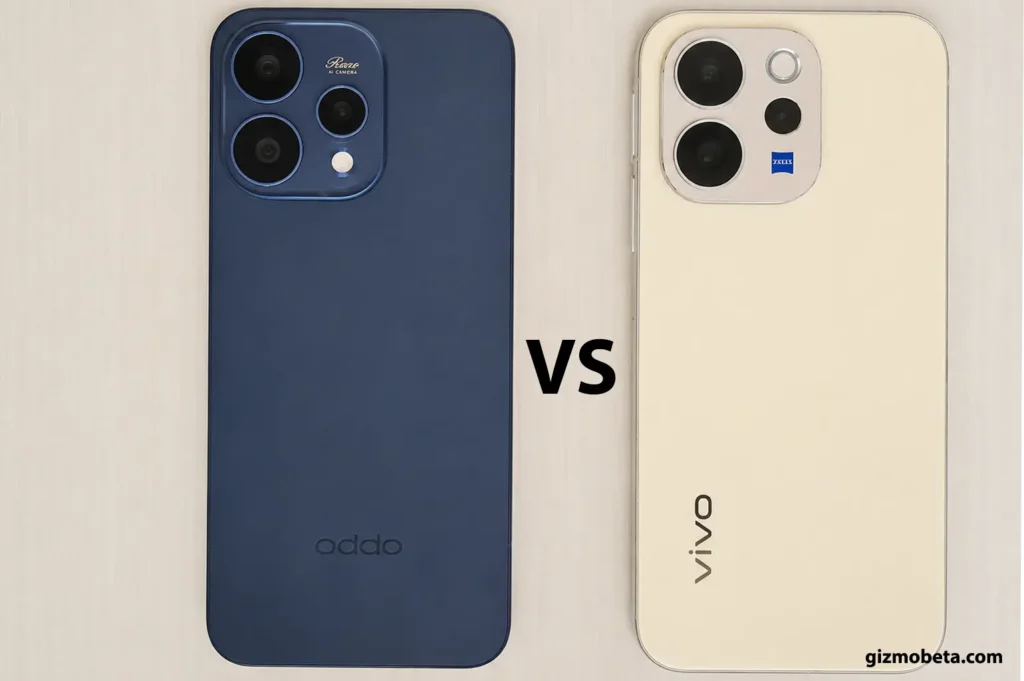
In terms of design, Vivo has made a huge improvement with the Vivo V70 compared to the older V60 and V50 models. If you look at Vivo’s previous phones, most of them featured very large displays and bulky designs.
Keeping the growing demand for compact smartphones in mind, Vivo has designed the V70 in a much more compact and comfortable form factor this time. The phone feels easier to hold, more premium in hand, and far more practical for one-handed usage compared to earlier Vivo devices.
Both the Vivo V70 and OPPO Reno 15 come with IP68 and IP69 ratings, which means both smartphones are water and dust resistant.
This makes both phones feel more premium and reliable for daily usage. Whether it is accidental water splashes, rain, or dusty environments, both devices are designed to handle such situations much better than normal smartphones.
On the other hand, if we talk about the OPPO Reno series, there do not seem to be many major design changes. After the Reno 13 and Reno 14, the Reno 15 also have almost the same size and overall design language.
OPPO has mostly continued with a similar slim and stylish look, but compared to Vivo’s newer compact approach, the Reno series does not feel significantly different in terms of design evolution.
When comparing the design of the Vivo V70 and the OPPO Reno 15, Vivo clearly feels more modern and compact this time.
The Vivo V70 comes with extremely slim bezels, which make the front look far more premium and immersive. It features a 6.59-inch display with a 1260 × 2750 pixel resolution and an impressive 5000 nits peak brightness, making the display look brighter and more flagship-like, especially during outdoor usage. The compact form factor also makes the phone feel more comfortable for one-handed use.
On the other hand, the OPPO Reno 15 has dimensions of 158.0 × 74.8 × 7.76 mm and weighs around 197g. While the Reno 15 still maintains a slim and stylish profile, the design language feels quite similar to previous Reno models. Compared to the Vivo V70, the bezels do not feel as slim, and the phone appears slightly larger and less compact in hand.
| Thickness | 7.59mm slim body | 7.77mm slightly thicker |
| Weight | Around 187g, lighter in hand | Around 197g, feels slightly heavier |
| Back Design | Minimal and clean matte finish | Glossy stylish back with flashy look |
| Frame Material | Aerospace-grade aluminium frame | Metal frame with glass back |
| Camera Module Design | Compact and balanced camera island | Bigger shiny camera module |
Performance
Talking about performance, both the Vivo V70 and OPPO Reno 15 compete very closely with each other. Vivo has been competing strongly in the smartphone market for years, and this time as well, the company has delivered a very impressive phone.
During gaming, the Vivo V70 delivers very smooth gameplay at around 60FPS to 90FPS, and multitasking also feels fast and responsive thanks to the Snapdragon 7 Gen 4 processor. App switching, social media usage, and daily tasks run without major lag issues.
The OPPO Reno 15 follows a very similar story because it also comes with the same processor. However, during gaming, slight lag or frame drops can sometimes be noticed compared to the Vivo V70. Still, in daily usage, the Reno 15 performs very well and feels smooth for regular tasks like browsing, watching videos, social media, and multitasking.
Daylight vs Low-Light Camera Samples
In daylight and low-light conditions, both the Vivo V70 and OPPO Reno 15 capture quite similar-looking photos in many situations. However, because of Vivo’s ZEISS camera tuning, night photography feels noticeably clearer and more refined on the Vivo V70.
In low-light shots, the Vivo V70 is able to maintain better sharpness, improved light balance, and more natural colors, while also reducing noise more effectively. This gives night photos a cleaner and more premium look compared to the Reno 15.
Video Stabilization
When it comes to video stabilization, the OPPO Reno 15 actually performs better than the Vivo V70. The Reno 15 is able to capture more stable and smoother videos, especially while walking or recording handheld shots.
During movement, the Reno 15 controls shakes more effectively, which makes the final footage look steadier and more cinematic. While the Vivo V70 also delivers good video quality, OPPO feels slightly ahead in stabilization performance.
Heating Test
After recording videos all day in hot weather and playing games for long hours, both the Vivo V70 and OPPO Reno 15 showed only normal levels of heating. The credit mainly goes to the advanced integrated vapor chamber cooling systems used inside both phones, which help control temperature effectively during heavy usage.
During gaming, slight heating can still be felt on the OPPO Reno 15, but overall both phones manage thermals quite well.
Vivo has used an advanced liquid-cooling vapor chamber measuring around 42
Charging Time Test
The OPPO Reno 15 comes with an 80W SUPERVOOC charger, which helps charge its large 7000mAh battery in around 60–65 minutes. Even with such a big battery, charging speed feels quite impressive for daily usage.
On the other hand, the Vivo V70 packs a slightly smaller 6500mAh battery, but Vivo provides a faster 90W FlashCharge support. Because of this, the phone can reach nearly 100% charge in around 50 minutes, making it slightly faster than the Reno 15 in charging performance00mm², which helps reduce heating during gaming, video recording, and multitasking. Similarly, the OPPO Reno 15 also comes with an advanced liquid-cooling vapor chamber system that keeps the phone stable during extended usage sessions.
Durability & Protection
In terms of durability, both the OPPO Reno 15 and Vivo V70 come with IP68 and IP69 ratings, which means both phones are highly resistant to water and dust. Because of this protection, users can even try underwater photography without worrying too much about accidental water exposure.
For build quality, OPPO has used an aerospace-grade aluminum frame, a matte glass and premium textured back, along with Corning Gorilla Glass 7i protection on the Reno 15. This makes the phone feel very solid and durable in hand.
On the other hand, Vivo has also focused heavily on premium durability by using an aerospace-grade aluminum alloy frame along with premium front and rear glass finishes, giving the V70 a sleek yet sturdy flagship-like feel.
My Openion
After using and testing both phones, I personally found the Vivo V70 to have a more premium and practical design. Its slim body and lightweight feel make it very comfortable for daily usage, especially during one-handed use. The matte finish also helps reduce fingerprints, which keeps the phone looking elegant.
On the other hand, the OPPO Reno 15 looks more attractive at first glance. Its glossy back panel and bold camera module give the phone a more stylish and eye-catching appearance, although it feels slightly heavier and fingerprints become visible more quickly.
If you prefer a classy and premium look, the Vivo V70 feels like the better choice. But if you like flashy and attention-grabbing designs, then the OPPO Reno 15 may impress you more.