
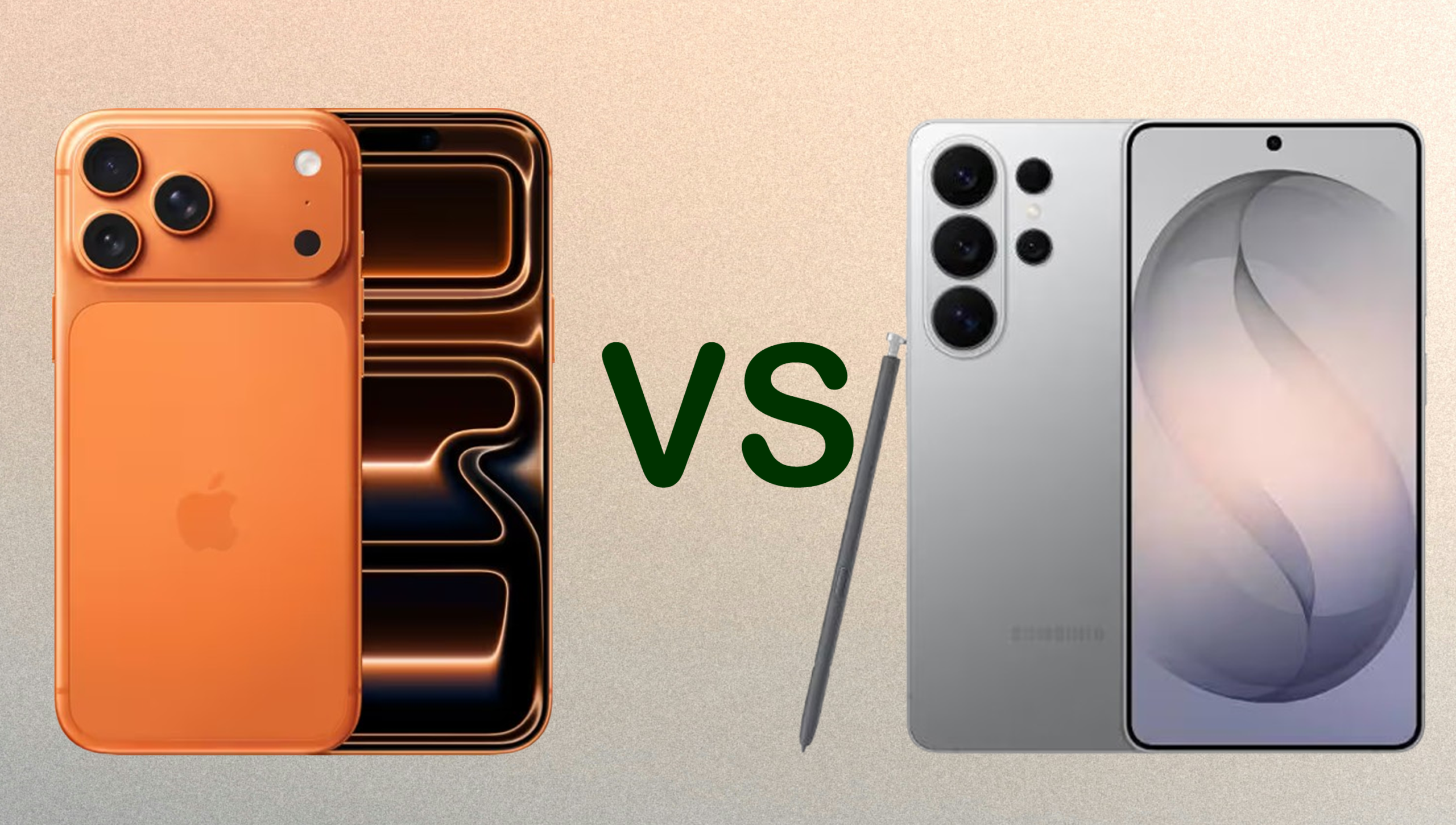
iPhone 17 Pro Max vs Samsung Galaxy S26 Ultra comparison. Compare design, display, camera, performance, battery life, AI features and expected price details.
In 2026, one of the biggest flagship smartphone comparisons is clearly between the iPhone 17 Pro Max and the Samsung Galaxy S26 Ultra. Both phones come with premium designs, powerful performance, advanced AI features, and flagship-level cameras, but the overall experience feels very different on each device. (Buy S25 Ultra on Discount)
On one side, Apple offers its smooth iOS ecosystem and cinematic-level video quality, while on the other side, Samsung brings features like powerful zoom cameras, the S Pen, and next-level customization options. If you are confused about which flagship is better for daily use, gaming, camera performance, or overall status value, then this comparison will help you understand both smartphones in detail.
| Specifications | Apple iPhone 17 Pro Max | Samsung Galaxy S26 Ultra 5G |
|---|---|---|
| Display | 6.9-inch Super Retina XDR OLED | 6.9-inch Dynamic AMOLED 2X |
| Refresh Rate | 120Hz ProMotion | 120Hz LTPO |
| Resolution | 2868 × 1320 pixels | QHD+ |
| Processor | Apple A19 Pro | Snapdragon 8 Elite Gen 5 |
| Operating System | iOS 26 | Android 16 (One UI 8.5) |
| RAM | (officially not disclosed) | 12GB / 16GB |
| Storage Options | 256GB / 512GB / 1TB / 2TB | 256GB / 512GB / 1TB |
| Rear Camera | 48MP Main + 48MP Ultra Wide + 48MP Telephoto | 200MP Main + 50MP Ultra Wide + 50MP Periscope + 10MP Telephoto |
| Front Camera | 12MP TrueDepth | 12MP |
| Optical Zoom | Up to 8x optical-quality zoom | 5x optical + 10x optical-quality |
| Digital Zoom | Up to 40x | Up to 100x Space Zoom |
| Video Recording | 4K Dolby Vision, ProRes | 8K Video Recording |
| Battery | Up to 39 hours video playback | 5000mAh |
| Charging | 40W wired, 25W MagSafe | 60W wired, 25W wireless |
| Wireless Charging | MagSafe + Qi2 | Qi2 Wireless |
| Build | Aluminum + Ceramic Shield 2 | Armor Aluminum + Gorilla Glass Armor |
| Biometrics | Face ID | Ultrasonic Fingerprint |
| Stylus Support | No | Built-in S Pen |
| Connectivity | Wi-Fi 7, Bluetooth 6, USB-C | Wi-Fi 7, Bluetooth 5.4, USB-C |
| Water Resistance | IP68 | IP68 |
| AI Features | Apple Intelligence | Galaxy AI + Gemini AI |
| Weight | 231g | Around 214g |
| Special Features | Dynamic Island, Spatial Video | Privacy Display, S Pen, Galaxy AI |
Camera
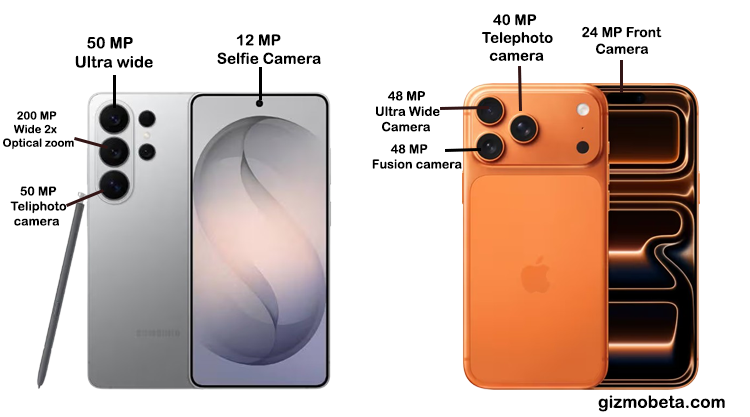
When it comes to cameras, both the iPhone 17 Pro Max and the Samsung Galaxy S26 Ultra deliver flagship-level photography, but the overall camera experience feels quite different.
The iPhone 17 Pro Max captures more natural-looking photos. Skin tones, HDR, and overall video quality feel better and more balanced compared to the S26 Ultra. Especially for Instagram, Snapchat, and YouTube creators, the iPhone is still considered one of the best options because app optimization is extremely fast and smooth. Video stabilization and cinematic recording quality also feel very refined and professional.
On the other hand, the Samsung Galaxy S26 Ultra feels much more powerful when it comes to zoom photography and detail capture. Its 200MP camera captures extremely sharp photos in daylight, and the 100X Space Zoom delivers a completely different experience for long-distance shots. Samsung photos also look more vibrant and eye-catching, which many social media users really enjoy.
Samsung has also improved night photography significantly this time, especially because of the brighter aperture and enhanced AI image processing, which help low-light shots look better than before. However, when it comes to overall consistency and achieving a more natural look, the iPhone 17 Pro Max still feels better than Samsung in many situations.
Design
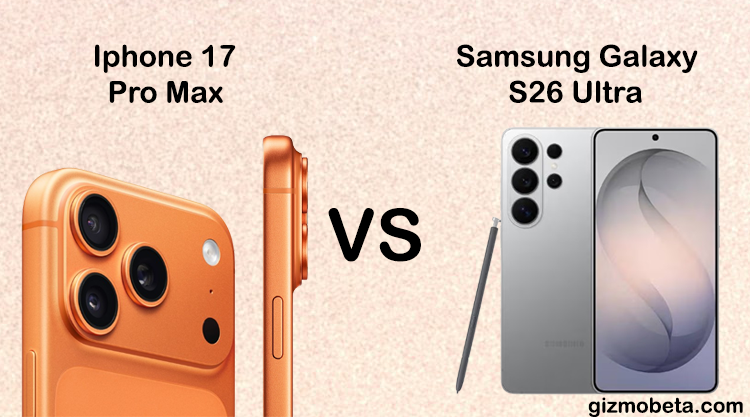
Talking about the design, both the iPhone 17 Pro Max and the Samsung Galaxy S26 Ultra deliver a premium flagship feel, but their design approach feels quite different.
The iPhone 17 Pro Max offers a cleaner and more premium-looking design. Its flat edges, titanium frame, and rounded corners give the phone a very classy feel. Apple has also introduced slimmer bezels and a more refined camera module this time, making the device look even more premium. The matte finish on the back also attracts fewer fingerprints, which helps maintain the clean look.
On the other hand, the Samsung Galaxy S26 Ultra has a more futuristic and professional-looking design. Its boxy shape, sharp corners, and built-in S Pen make the phone feel like a true productivity flagship. Samsung has continued the signature Ultra-series camera design, where the individual camera rings are placed directly on the back panel, giving the device a very unique look. The slim body and curved finishing also help the phone feel modern and premium, even with its large display size.
Display
| Display Features | Apple iPhone 17 Pro Max | Samsung Galaxy S26 Ultra 5G |
|---|---|---|
| Display Size | 6.9-inch Super Retina XDR OLED | 6.9-inch Dynamic AMOLED 2X |
| Refresh Rate | 120Hz ProMotion | 120Hz LTPO |
| Resolution | 2868 × 1320 pixels | QHD+ Resolution |
| Brightness | Higher outdoor visibility | Extremely bright AMOLED panel |
| Colors | Natural & balanced colors | More vibrant & punchy colors |
| HDR Support | Dolby Vision | HDR10+ |
| Bezels | Very slim & symmetrical | Slim bezels with boxy look |
| Display Feel | Smooth & polished | More immersive & cinematic |
| Eye Comfort | Better color calibration | Better contrast in dark scenes |
| Gaming Experience | Stable & optimized | More visually immersive |
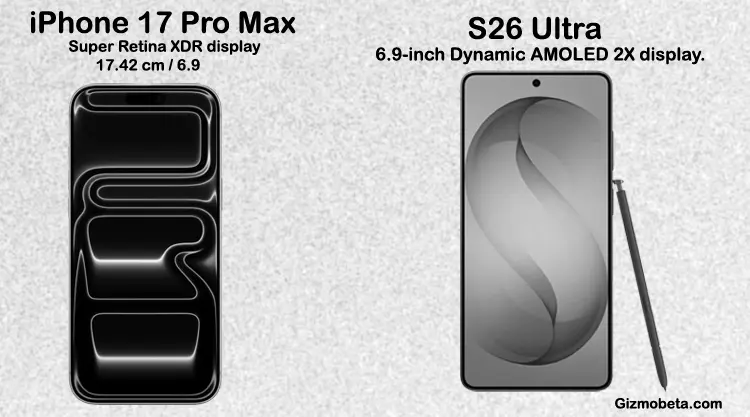
If we compare the displays, both phones offer flagship-level screen quality, but the experience feels slightly different.
The iPhone 17 Pro Max comes with Apple’s Super Retina XDR OLED panel, which delivers very natural-looking colors. The display brightness feels excellent even outdoors, and thanks to the 120Hz ProMotion refresh rate, scrolling and animations feel extremely smooth. Apple’s displays are especially known for their realistic colors and accurate tone reproduction.
On the other hand, the Samsung Galaxy S26 Ultra features a Dynamic AMOLED 2X display that looks more vibrant and eye-catching compared to the iPhone 17 Pro Max. Samsung has traditionally been very strong in display quality, and this time as well, the Ultra’s screen feels highly immersive for movies, gaming, and HDR content. Thanks to the QHD+ resolution and higher contrast levels, details and black levels look extremely premium.
Performance
In terms of performance, the Samsung Galaxy S26 Ultra can definitely compete with the iPhone 17 Pro Max, because in some areas the Snapdragon 8 Elite chipset is performing even better than Apple’s A19 processor. (Read about more flagships)
Apple mainly focuses on strong single-core performance and optimization, which makes iPhones feel extremely smooth in daily usage. On the other hand, Samsung’s Snapdragon processor delivers more raw power, especially in multitasking, AI processing, and heavy gaming workloads. Because of this, the Galaxy S26 Ultra feels more powerful in certain high-performance tasks.
| Performance Features | iPhone 17 Pro Max | Samsung Galaxy S26 Ultra |
|---|---|---|
| Processor | Apple A19 Pro | Snapdragon 8 Elite Gen 5 |
| Architecture | 3nm | 3nm |
| GPU | Apple Custom GPU | Adreno GPU |
| RAM | Optimized RAM Management | 12GB / 16GB RAM |
| Gaming Performance | Stable FPS & Less Heating | Higher Peak FPS |
| App Optimization | Excellent | Very Good |
| Multitasking | Smooth & Fluid | Better Split-Screen Multitasking |
| Cooling System | Improved Vapor Cooling | Advanced Vapor Chamber Cooling |
| Benchmark Score | Better Single-Core Performance | Better Multi-Core Performance |
| AI Performance | Apple Intelligence | Galaxy AI + Gemini AI |
| Video Editing | Faster Rendering | Better Heavy Multitasking |
| Long-Term Performance | More Stable | More Powerful |
| Best For | Smooth Daily Experience | Heavy Gaming & Power Users |
Gamming– When it comes to gaming, both the iPhone 17 Pro Max and the Samsung Galaxy S26 Ultra perform extremely well. Whether it’s BGMI, Free Fire, or any other heavy game, the processors in both phones handle gaming very smoothly.
One of the best things is that during gameplay, neither phone shows noticeable lag or stuttering. Both smartphones also feature excellent cooling systems, so even after hours of gaming, heating and frame-drop issues remain very well controlled. Overall, both devices deliver a true flagship-level gaming experience.
Multitasking– In multitasking, the Samsung Galaxy S26 Ultra can sometimes perform even better than the iPhone 17 Pro Max. Lag is almost negligible, even if you keep multiple apps and tabs open at the same time.
The iPhone still feels extremely smooth overall, but in some heavy multitasking situations, it can occasionally feel slightly slower while processing multiple tasks in the background. Samsung’s larger RAM management and aggressive multitasking features help the S26 Ultra feel more powerful for productivity-focused users.
Benchmarks – Talking about benchmarks, both the iPhone 17 Pro Max and the Samsung Galaxy S26 Ultra deliver flagship-level performance, but their benchmark results are slightly different.
The iPhone 17 Pro Max, powered by Apple’s A19 Pro chipset, generally performs better in single-core benchmarks, which helps in smoother app optimization and faster response in daily tasks. Apple’s chip is highly optimized with iOS, which is why animations and app performance feel extremely fluid.
On the other hand, the Galaxy S26 Ultra with the Snapdragon 8 Elite chipset performs very strongly in multi-core benchmarks and GPU-heavy workloads. This gives Samsung an advantage in multitasking, AI processing, and long gaming sessions. In some graphics and stress tests, the Snapdragon chipset can even outperform Apple’s processor.
Overall, benchmark numbers of both phones are extremely high, and in real-life usage, both feel incredibly fast. The difference mostly comes down to optimization versus raw power.
Battery & Charging
In terms of charging capacity and battery size, the Samsung Galaxy S26 Ultra is also considered better than the iPhone 17 Pro Max in several areas.
The iPhone 17 Pro Max comes with a 4823mAh battery, which Apple claims can deliver up to 37 hours of video playback and around 33 hours of streamed video playback. Apple has also improved charging speeds this time, where the phone can charge up to 50% in roughly 20 minutes using a 40W+ adapter and USB-C cable.
On the other hand, the Samsung Galaxy S26 Ultra comes with a 5000mAh battery along with 60W wired charging and 25W fast wireless charging support. With wired charging, the phone can get fully charged in around 50–55 minutes, and in normal usage, it can easily last around 8–9 hours of active screen time.
The main reason why Samsung’s battery drains comparatively faster is because of its large high-resolution display and powerful performance setup. Features like the bright QHD+ screen, 120Hz refresh rate, heavy multitasking, and gaming consume more power, which causes the battery to drain quicker during intensive usage.
Software Experience
If we talk about the software experience, the iPhone 17 Pro Max comes with iOS 26, while the Samsung Galaxy S26 Ultra runs on One UI 8.5. Both companies offer very smooth and premium software experiences, but the way both phones feel in daily usage is quite different.
The biggest strength of iOS is its smoothness and optimization. On the iPhone 17 Pro Max, animations and app opening speeds feel extremely smooth. Even when multiple apps are running in the background, the experience remains fluid and responsive.
Apple controls both the hardware and software of the iPhone, which is why the device stays smooth even after long-term usage. Apps are also better optimized for iOS, especially platforms like Instagram, Snapchat, and video editing applications, which often perform more consistently and smoothly on iPhones.
On the other hand, Samsung’s One UI is far ahead when it comes to features and customization. On the Samsung Galaxy S26 Ultra, you can customize almost everything, including themes, icons, lock screen styles, multitasking layouts, and even the Always-On Display. Features like split-screen multitasking, floating windows, and Samsung DeX are especially useful for power users and productivity-focused tasks.
Talking about the ecosystem, Apple’s ecosystem feels much more tightly connected. If you already own a MacBook, iPad, Apple Watch, or AirPods, the experience with the iPhone 17 Pro Max becomes even smoother. File sharing, calls, messages, and device syncing feel extremely seamless and convenient.
AI Features
| AI Features Comparison | iPhone 17 Pro Max | Samsung Galaxy S26 Ultra |
|---|---|---|
| AI Platform | Apple Intelligence | Galaxy AI + Google Gemini |
| Writing Tools | Rewrite, Summarize, Smart Reply | Rewrite, Tone Change, Smart Compose |
| Live Translate | Calls, Messages & FaceTime Translation | Calls, Messages & Real-Time Interpreter |
| AI Photo Editing | Clean Up, Object Removal | Generative Edit, Object Eraser |
| AI Image Generation | Image Playground | AI Image Generator |
| Voice Assistant | Smarter Siri Integration | Gemini AI Assistant |
| Web/Page Summaries | Safari AI Summaries | Samsung Notes & Browser Summaries |
| AI Notes Features | Smart Summaries | Auto Format & Summaries |
| AI Call Features | Call Recording Summaries | Live Translate During Calls |
| AI Search | Visual Intelligence Search | Circle to Search |
| Productivity Features | Better Apple Ecosystem Integration | Better Multitasking AI Features |
| AI Privacy | On-Device Processing Focus | Hybrid Cloud + On-Device AI |
| Best For | Simple & Private AI Experience | More Powerful AI Features |
Gaming Experience
After testing both phones continuously for around 20 hours with gaming, charging, and heavy usage, one thing becomes very clear — the gaming experience of the iPhone 17 Pro Max and the Samsung Galaxy S26 Ultra targets different types of users.
The iPhone 17 Pro Max feels more stable during long gaming sessions. In games like BGMI and COD Mobile, the FPS remains very consistent, and the phone comparatively heats up less. Even after 3–4 hours of continuous gaming, the performance does not suddenly drop, which is why competitive gamers may prefer the iPhone’s smoothness more. The touch response and gyroscope also feel very accurate and responsive.
On the other hand, the Samsung Galaxy S26 Ultra delivers more aggressive performance at the beginning. The graphics quality, display brightness, and AMOLED colors make gaming feel much more immersive. In heavy games like Genshin Impact and Warzone Mobile, the visuals look more eye-catching than on the iPhone. Samsung’s vapor chamber cooling has improved this time, but during very long gaming sessions, the phone still feels slightly warmer compared to the iPhone.
| Gaming Experience | iPhone 17 Pro Max | Samsung Galaxy S26 Ultra |
|---|---|---|
| Long Gaming Stability | More Stable | Powerful but Slightly Warmer |
| FPS Performance | Consistent FPS | Higher Peak FPS |
| Heating After Hours | Less Heating | More Heating Under Heavy Load |
| Display Experience | Smooth & Balanced | More Vibrant & Immersive |
| Touch Response | Accurate & Fast | Extremely Responsive |
| Battery Drain | Better Optimization | Slightly Faster Drain |
| BGMI Experience | Better Competitive Gaming | Better Graphics Experience |
| Genshin Impact | Stable Gameplay | Better Visual Quality |
| Cooling System | Efficient Thermal Control | Bigger Vapor Chamber |
| Best For | Competitive Gamers | Graphics & Heavy Gaming Users |
Camera Video Comparison
After testing the cameras for 3 days, one thing becomes very clear — both the iPhone 17 Pro Max and the Samsung Galaxy S26 Ultra deliver flagship-level video quality, but their output feels quite different.
The iPhone 17 Pro Max feels more consistent and professional, especially in video recording. In 4K recording, colors look natural and balanced. Even during walking shots and handheld recording, the stabilization remains very smooth, which is why vloggers and content creators often prefer the iPhone’s cinematic output.
Nowadays, there is already a strong perception among content creators that iPhones deliver better videos and photos compared to most Android smartphones, and with the iPhone 17 Pro Max, that experience genuinely feels true in many situations.
On the other hand, the Samsung Galaxy S26 Ultra delivers a more aggressive flagship-style video experience. Features like 8K recording, stronger zoom video capabilities, and vibrant output make videos look more eye-catching. In night video recording, Samsung captures brighter scenes, and details in low-light areas appear more visible. The front camera video quality also looks very sharp and detailed, especially in daylight conditions.
Final verdict
If we talk about the overall experience, both the iPhone 17 Pro Max and the Samsung Galaxy S26 Ultra are top-tier flagship smartphones in their category. Both devices offer premium designs, powerful cameras, and flagship-level performance, but the real difference comes down to the type of user experience they provide.
For camera-focused users, the iPhone 17 Pro Max feels like the better choice. Photos and videos look more natural, video stabilization is excellent, and the social media optimization is extremely strong, which means users get social-media-ready photos and videos directly from the camera. If you regularly create Instagram reels, YouTube videos, or do daily photography, the iPhone’s camera output feels more polished and reliable.
On the other hand, the Samsung Galaxy S26 Ultra performs exceptionally well in zoom photography and highly detailed shots. It can capture impressive macro shots, long-distance zoom photos, and vibrant-looking images that feel more dramatic and eye-catching. If you prefer powerful zoom and colorful flagship photography, Samsung feels like the more exciting option.
Talking about gaming, the iPhone 17 Pro Max performs more consistently during long gaming sessions. Heating feels lower and FPS stability remains very strong, making the iPhone smoother for competitive gaming. However, if you enjoy high graphics settings and a more immersive visual experience, the Samsung Galaxy S26 Ultra’s large AMOLED display and powerful hardware make gaming feel more entertaining and visually rich.
For content creators, the iPhone 17 Pro Max feels slightly more practical overall. Video stabilization, cinematic recording, and app optimization are extremely polished. Especially for users who shoot reels, vlogs, and short-form videos, the iPhone’s output often feels better optimized directly for social media platforms. Samsung is still a very strong creator-focused phone, especially for zoom videos and bright night recording, but in terms of overall consistency, the iPhone still feels slightly ahead.