
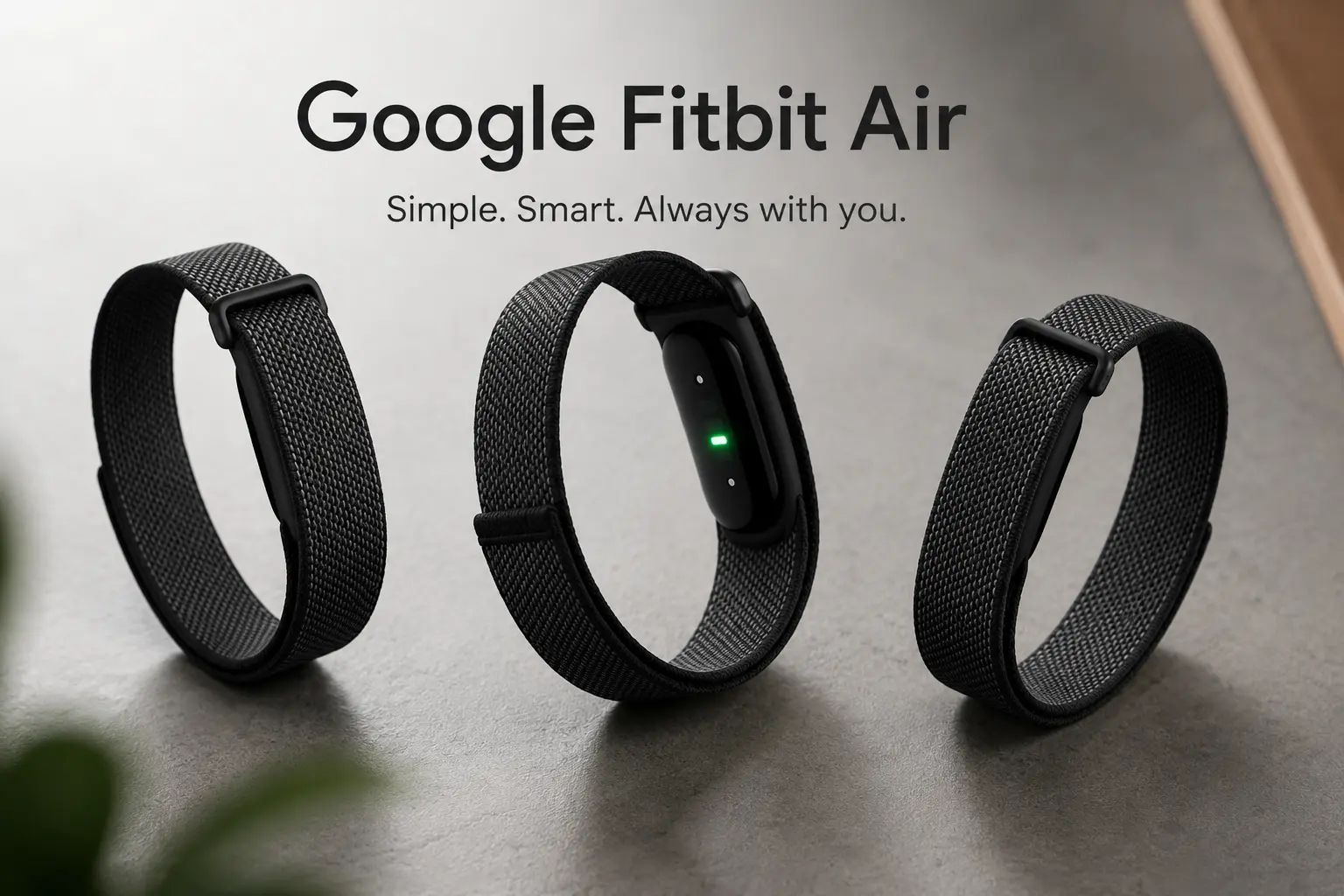
Discover Google Fitbit Air price, features, battery life, health tracking, Gemini AI integration, sleep monitoring, and why it could be the best screen-less fitness tracker of 2026.
Fitness trackers have become smarter over the years, but many users still face the same problem: high costs and features they rarely use.
Products like Whoop offer excellent health tracking and recovery insights, but their subscription-based model can become expensive over time. For everyday users who simply want better sleep tracking, activity monitoring, and health insights, that cost is difficult to justify.
This is where Google Fitbit Air appears to be taking a different approach. Instead of adding another screen to your daily life, it focuses on delivering health data in a simpler and less distracting way.
Why a Screenless Tracker Makes Sense
Most people already spend several hours every day looking at smartphone screens. Smartwatches added convenience, but they also brought notifications, messages, and constant alerts directly to our wrists.
After a while, many users realize they mainly use their smartwatch for fitness tracking while ignoring most of the smart features.
Fitbit Air removes those distractions completely. There is no display competing for your attention, which means the device can focus entirely on health tracking and battery efficiency.
Compact Design for Everyday Comfort
One of the first things users are likely to notice is its lightweight design. Unlike bulky smartwatches, Fitbit Air is designed to stay out of the way while continuously collecting health data.
The package remains simple and usable, including the tracker, charging puck, charging cable, and standard documentation.
Because of its compact size, it feels less like a gadget and more like a natural part of your daily routine.
Health Tracking Remains the Priority
Google appears to be focusing on the metrics that most users actually care about.
The tracker can monitor sleep quality, deep sleep duration, recovery patterns, heart rate, daily activity, and workout sessions. It also tracks movement throughout the day to help users understand their all day and night activity levels.
Additional sensors are expected to provide insights such as blood oxygen levels (SpO2), resting heart rate, and skin temperature trends.
For most people, these are the health metrics that matter far more than receiving notifications on their wrist.
Gemini Could Be the Biggest Upgrade on Google FitBit Air

The most interesting aspect of Fitbit Air may not be the hardware itself but Google’s software ecosystem.
Most fitness trackers simply present numbers and charts. Users then have to figure out what those numbers actually mean.
With Gemini integration, health data could become much easier to understand. Instead of only displaying sleep duration or calorie burn, the system may connect sleep, recovery, activity levels, and daily habits to provide personalized recommendations.
In health terms, it could feel more like having a digital health coach rather than a traditional fitness tracker.
Battery Life That Fits Real Life
Battery life remains one of the biggest frustrations with modern smartwatches.
Many devices require daily charging, which often leads users to stop wearing them consistently.
Because Fitbit Air does not include a display, battery performance is expected to be significantly better. Reports suggest users could see around 5–7 days of battery life depending on usage patterns.
A full charge is expected to take roughly 90 minutes, making it easy to top up during the week.
Google FitBit Air’s Sensors and Features
Despite its small size, Fitbit Air is expected to include a strong set of health-focused sensors:
- Continuous Heart Rate Monitoring
- Blood Oxygen (SpO2) Tracking
- Skin Temperature Sensor
- 3-Axis Accelerometer
- Gyroscope
- Vibration Alerts and Silent Alarm
- 5ATM Water Resistance
These features should make it suitable for daily wear, workouts, sleep tracking, and outdoor activities.
Google Fitbit Air vs Whoop: Quick Comparison
| Feature | Google Fitbit Air | Whoop |
|---|---|---|
| Display | No Display | No Display |
| Sleep Tracking | Yes | Yes |
| Heart Rate Monitoring | Yes | Yes |
| Recovery Insights | Expected | Advanced |
| AI-Based Insights | Gemini Integration | Whoop Coach |
| Battery Life | Up to 7 Days | Around 5 Days |
| Water Resistance | 5ATM | Water Resistant |
| Subscription Cost | Lower Expected Cost | Higher Subscription Cost |
| Best For | Everyday Users | Serious Athletes |
Pricing and Availability
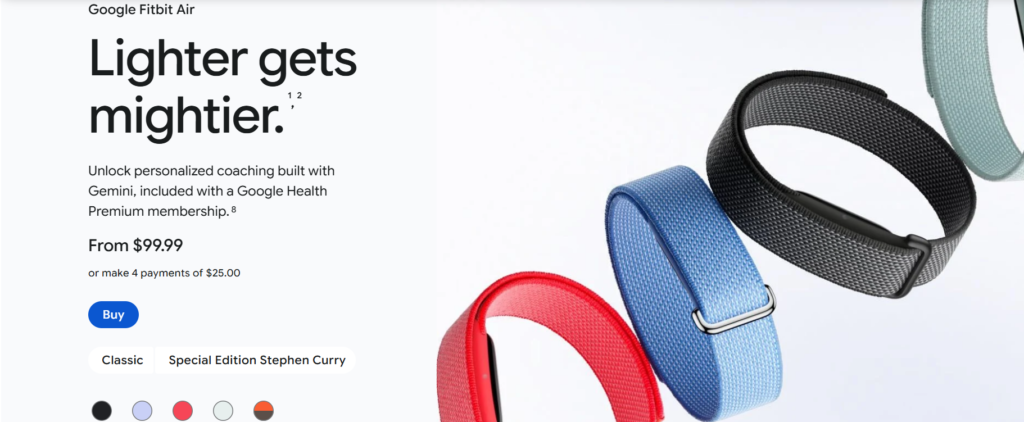
Google Fitbit Air is priced at $99.99 in the United States, making it one of the most affordable screen-less health trackers available. The device has already been launched and is available for purchase through the Google Store and other authorized retailers.
Customers can buy Fitbit Air directly from the Google Store, where it is offered in multiple band options and color variants. Depending on the region, availability and final pricing may vary due to local taxes and shipping charges.
Final Verdict
Google Fitbit Air is not trying to be another smartwatch packed with notifications and apps. Instead, it focuses on what many users actually want: accurate health tracking, useful insights, long battery life, and minimal distractions.
For professional athletes, advanced platforms like Whoop may still offer deeper performance analytics. However, for the average user who wants better sleep tracking, activity monitoring, heart rate insights, and AI-powered health guidance.
Find best Mobiles Under 25k –