
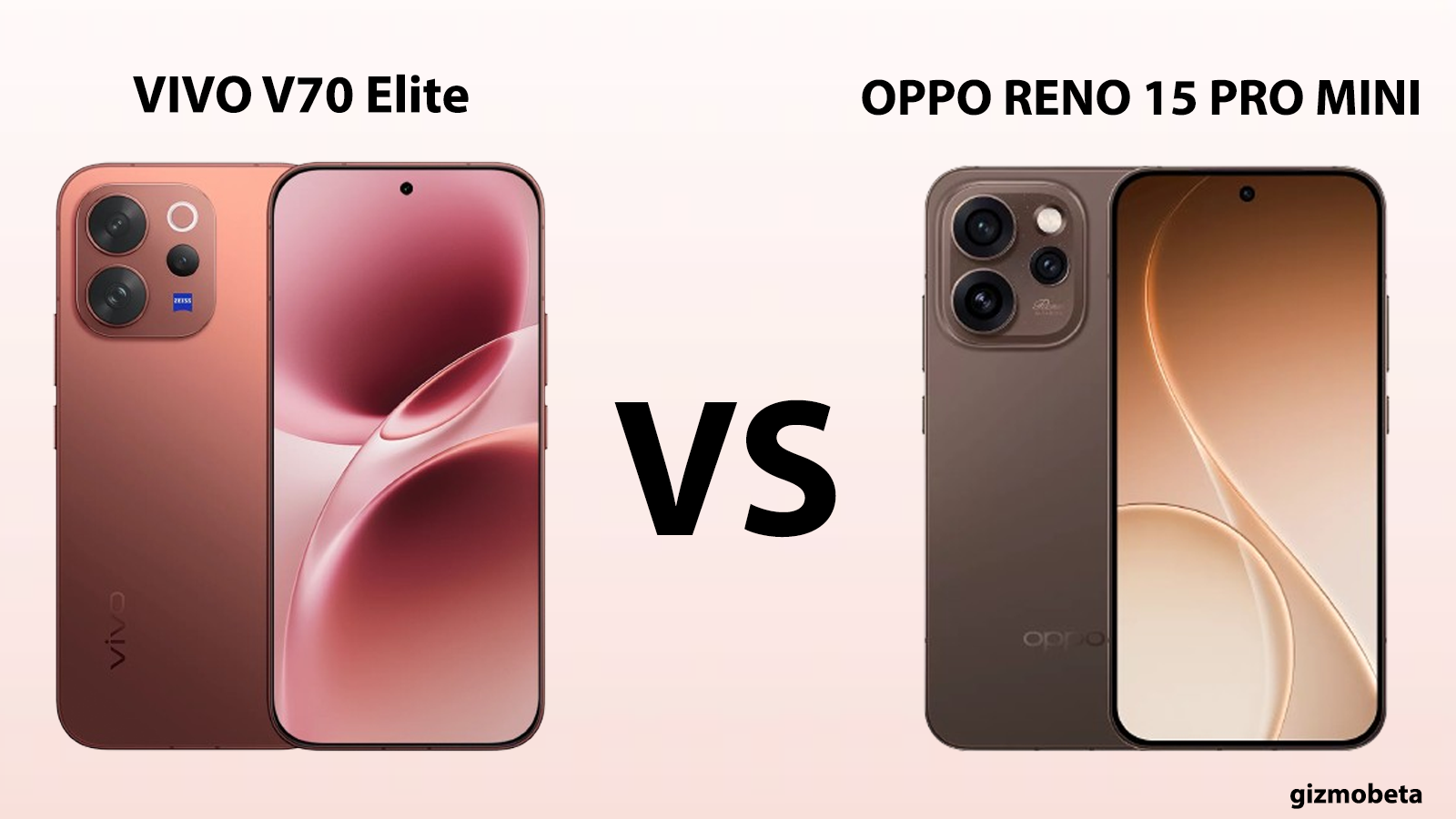
In today’s growing smartphone market and among so many smartphones, it has become very difficult to choose which phone will be the best in the mid-range segment. Today, we are bringing Vivo V70 Elite and Oppo Reno 15 Pro Mini. Which phone can be better for you? The one that performs better in camera, processor, design, look, and performance, and this will make it easier for you to choose the right phone.
| Feature | OPPO Reno 15 Pro Mini | Vivo V70 Elite |
|---|---|---|
| Operating System | ColorOS 16 (Android 16) | OriginOS 6 (Android 16) |
| Software Experience | Smoother animations, more customization, better AI features | Improved animations and smoothness, Dynamic Island-like feature |
| Update Support | 5 major Android OS updates and 6 years of security patches | 4 major Android OS upgrades and 6 years of security updates |
| Display Quality | Excellent | Excellent |
| Build Quality | Excellent | Excellent |
| One-Handed Usage | More comfortable and handy | Slightly less comfortable |
| Main Camera | 200MP | 50MP |
| Telephoto Camera | 50MP | 50MP |
| Ultra-Wide Camera | 50MP | 8MP |
| Ultra-Wide Quality | Better details, better low-light performance | Noticeably lower detail |
| Main Camera Photos | Better detail, color accuracy, and skin tones | Good, but behind OPPO |
| Portrait Photography | Better edge detection | Edge detection can be inconsistent |
| Selfie Camera | 50MP | 50MP |
| Selfie Quality | Better colors, skin tones, and sky reproduction | Similar detail but less accurate colors |
| Video Recording | Better video quality | Good, but not as refined |
| Camera Features | More advanced camera features | Fewer camera-focused features |
| Processor | MediaTek Dimensity 8450 | Snapdragon 8s Gen 3 |
| AnTuTu Score | Around 2 Million | Around 2 Million |
| Storage Type | UFS 3.1 | UFS 4.1 |
| App Opening Speed | Slightly slower | Very fast |
| BGMI Launch Speed | Slightly slower | Very fast |
| COD Mobile Launch Speed | Slightly slower | Very fast |
| BGMI Graphics Support | Up to 120 FPS | Lower graphics support |
| Video Rendering | Slower | Faster |
| Gaming Performance | Slightly better raw performance | Excellent |
| Fingerprint Scanner | Optical/In-display | Ultrasonic In-display |
| NFC Support | No | Yes |
| Sound Quality | Better | Better |
| AI Features | Mind Space, AI productivity tools, smart shortcuts | 4 seasion portraits, Ziess Potraits much better to oppo |
| Lock Screen Customization | More advanced | Advanced |
| Performance | Excellent | Excellent |
| Camera Experience | Clearly superior | Average for a camera-focused phone |
| Winner | Better all-round package | Strong performance |
What’s Inside the Box
First, let’s talk about what you get inside the box of both phones. The Vivo V70 Elite box includes a transparent back cover, a 90W FlashCharge adapter, a USB Type-C cable, a user manual, and a SIM ejector tool.
The OPPO Reno 15 Pro Mini box also includes almost the same contents. OPPO provides a coloured back cover, an 80W SUPERVOOC adapter, a USB Type-C cable, a user manual, and a SIM ejector tool.
Both companies are trying to provide users with a complete in-box experience, where both the charger and protective cover are included inside the box.
Design
Now let’s talk about the design. Both phones feel quite similar. Both devices come with a compact form factor, and both feature a matte-finish back panel. Because of this, fingerprint marks do not appear easily on the phones, and they continue to look clean for a long time.
The camera module on both smartphones also gives a very similar premium feel. Talking about colour options, the Vivo V70 Elite is available in three colours — Passion Red, Sand Beige, and Authentic Black. On the other hand, the OPPO Reno 15 Pro Mini comes in Glacier White, Crystal Pink, and Cocoa Brown colour options.
If we talk about compactness, the OPPO Reno 15 Pro Mini feels slightly more compact than the Vivo V70 Elite, making it even easier to use with one hand. Both phones feature a metal frame body, which gives them a premium and sturdy feel. Additionally, both smartphones come with an IP69 rating.
Display
In terms of display protection, the OPPO comes with Gorilla Glass 7i, while the Vivo features Schott Xensation protection. Both Vivo and OPPO offer narrow bezels around the display.
Talking about display size, the OPPO has a 6.23-inch display, while the Vivo comes with a 6.29-inch display. Since both phones fall into the mid-range flagship category, the display quality on both devices is excellent.
Both phones support HDR10+, which means OTT apps will also deliver very good results while watching videos and other content. The peak brightness on both phones is 1800 nits. Both devices also feature a 120Hz refresh rate.
When it comes to the fingerprint scanner, the Vivo scans slightly faster because of its ultrasonic fingerprint sensor. The phone unlocks very quickly on the Vivo, whereas the OPPO takes a little more time. However, the difference is only a matter of milliseconds between the fingerprint scanners of both phones.
Camera
Inside the OPPO Reno 15 Pro Mini , you get a 200MP main camera, a 50MP telephoto camera, and a 50MP ultra-wide camera. On the other hand, the Vivo V70 Elite comes with a 50MP main camera, a 50MP telephoto camera, but only an 8MP ultra-wide camera.
And in my opinion, after looking at the specifications, one thing becomes quite clear. If you compare the ultra-wide cameras, Vivo’s 8MP ultra-wide sensor is noticeably behind OPPO’s 50MP ultra-wide camera. The first major difference you will notice is in the level of detail, where OPPO is expected to capture significantly more detail and clarity in ultra-wide shots.
Ultra Wide camera test
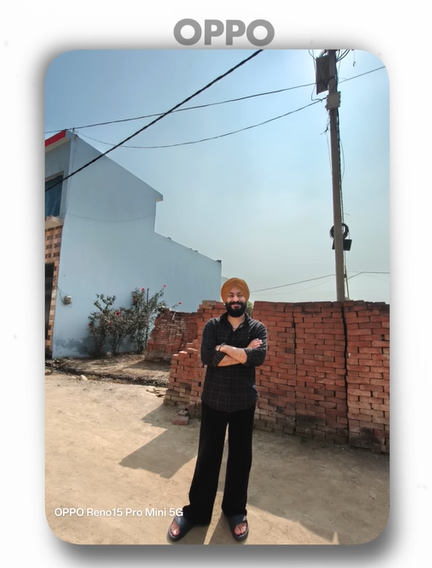

If you look at low-light shots, both phones’ ultra-wide cameras produce bright-looking images, but the OPPO retains noticeably more detail. This becomes especially useful when shooting in challenging lighting conditions. So, the ultra-wide camera comparison is pretty clear.
Main Camera result
Now, let’s talk about the main camera and telephoto camera. If you look at the main camera photos, you’ll likely notice that OPPO’s main camera delivers better detail. This is particularly evident when you observe skin texture and finer facial details. At the same time, OPPO also performs very well in terms of color accuracy and skin tone reproduction. The colors captured by the OPPO feel more natural and true-to-life, making the image look more accurate.


Both phones come with a 50MP selfie camera, so the level of detail feels quite similar on both devices. However, when it comes to color reproduction, skin tones, and elements like the sky, the OPPO delivers a more pleasing and natural-looking result.
In portrait shots, OPPO also feels better in terms of edge detection. The subject separation is more accurate, whereas Vivo sometimes struggles to detect edges as precisely. The same trend continues in low-light conditions, where differences in colors and skin tones become noticeable, with OPPO generally producing more refined and natural-looking images.
Software
OPPO comes with ColorOS 16, while Vivo offers OriginOS 6. Both smartphones run on the latest Android 16. When it comes to software updates, OPPO has a slight advantage with better long-term update support.
Apart from that, both devices include most of the essential features. You can create App Locks, use Dual Apps, hide applications, and even record calls without notifications. So, the basic feature set is well covered on both phones.
Now, one thing I want to make clear is that OriginOS 6 feels significantly improved. The animations are much better than before, and the smoothness has definitely been enhanced. You also get advanced lock screen customization features, including depth effects and wallpaper animations. For example, when you flip the phone, the wallpaper can react with animation effects. Vivo also offers a feature similar to Dynamic Island, which adds to the overall experience. So yes, the improvements are clearly noticeable.
However, I think most people already know that the smoothness and animation quality of ColorOS 16 are currently among the best in the Android ecosystem. The UI feels exceptionally fluid. Lock screen customization is also more extensive, allowing you to add text, apply different effects, and enjoy more refined animations. You can even press and hold certain icons to stretch them and add useful shortcuts directly.
In addition, ColorOS 16 includes several built-in AI-powered productivity features, such as Mind Space and other smart tools that enhance the user experience.
One more advantage that Vivo offers is NFC support. At this price point, Vivo includes NFC functionality, which can be useful for contactless payments, quick device pairing, and other wireless features.
On the other hand, OPPO has not provided NFC support in this device. So, if NFC is an important feature for your usage, Vivo definitely has an edge in this area.
While OriginOS 6 has improved considerably, ColorOS 16 still holds the edge. OPPO offers slightly better update support, more software features, and a level of stability and refinement that currently feels superior to OriginOS 6.
Performance
The Vivo comes with the Snapdragon 8s Gen 3 processor, while the OPPO is powered by the MediaTek Dimensity 8450 chipset. If you look at their AnTuTu scores, there isn’t a huge difference between them. Both deliver scores that are very close, hovering around the 2 million mark.
However, one reason you may notice a difference in real-world usage is that the Vivo comes with UFS 4.1 storage, whereas the OPPO uses UFS 3.1 storage. For normal day-to-day tasks, the difference is not very noticeable because both phones are extremely powerful. App opening speeds feel fast on both devices, and overall performance is excellent.
That said, when we launched heavier applications and games, some differences started to appear. For example, when launching BGMI, the Vivo opened the game slightly faster. The same happened with Call of Duty Mobile—the Vivo again managed to load the game a bit quicker.
However, there is one area where OPPO has an advantage. In BGMI, the graphics support is better on the OPPO, offering support for 120 FPS, which can provide a smoother gaming experience.
We also performed a heavy video rendering test by exporting the same video on both phones at the same time. In this test as well, the Vivo completed the rendering process first.
So, Vivo has definitely done a great job when it comes to raw performance. Thanks to its faster storage and strong optimization, it tends to complete demanding tasks slightly quicker than the OPPO.
Conclusions
In the end, we have compared almost every aspect of these two phones. Vivo certainly comes with some advantages of its own. It offers NFC support, an ultrasonic fingerprint scanner, and strong performance. However, the biggest disappointment is the camera. Considering that this is marketed as a camera-focused phone, the camera performance feels quite average.
On the other hand, the OPPO feels more comfortable. It is easier to handle, especially for one-handed use. The software experience feels better, the display and build quality are impressive, and the sound quality is also superior.
Most importantly, the camera is where OPPO clearly stands out. It captures better photos, records better videos, and offers more useful camera features. the camera experience is noticeably.
So, if you were confused between these two phones, I would definitely recommend choosing the OPPO. It provides a more complete and balanced flagship experience with fewer compromises.
Final Verdict
| Category | Winner |
|---|---|
| Display | OPPO |
| Build Quality | OPPO |
| Software | OPPO |
| Updates | OPPO |
| Main Camera | OPPO |
| Ultra-Wide Camera | OPPO |
| Selfie Camera | OPPO |
| Portraits | OPPO |
| Video Recording | OPPO |
| Sound Quality | OPPO |
| Performance | Vivo |
| Storage Speed | Vivo |
| Video Rendering | Vivo |
| Fingerprint Scanner | Vivo |
| NFC | Vivo |
| Gaming Features | OPPO |